The machine can write clever forever. It cannot write true.
A year of watching people hand the wrong half of the job to a robot.

Someone showed me a message last month that they knew, in their gut, a machine had written. They could not have told you how. Nothing was wrong with it. The grammar was immaculate. The points were fair. It was polite, structured, reasonable. And every word of it was dead.
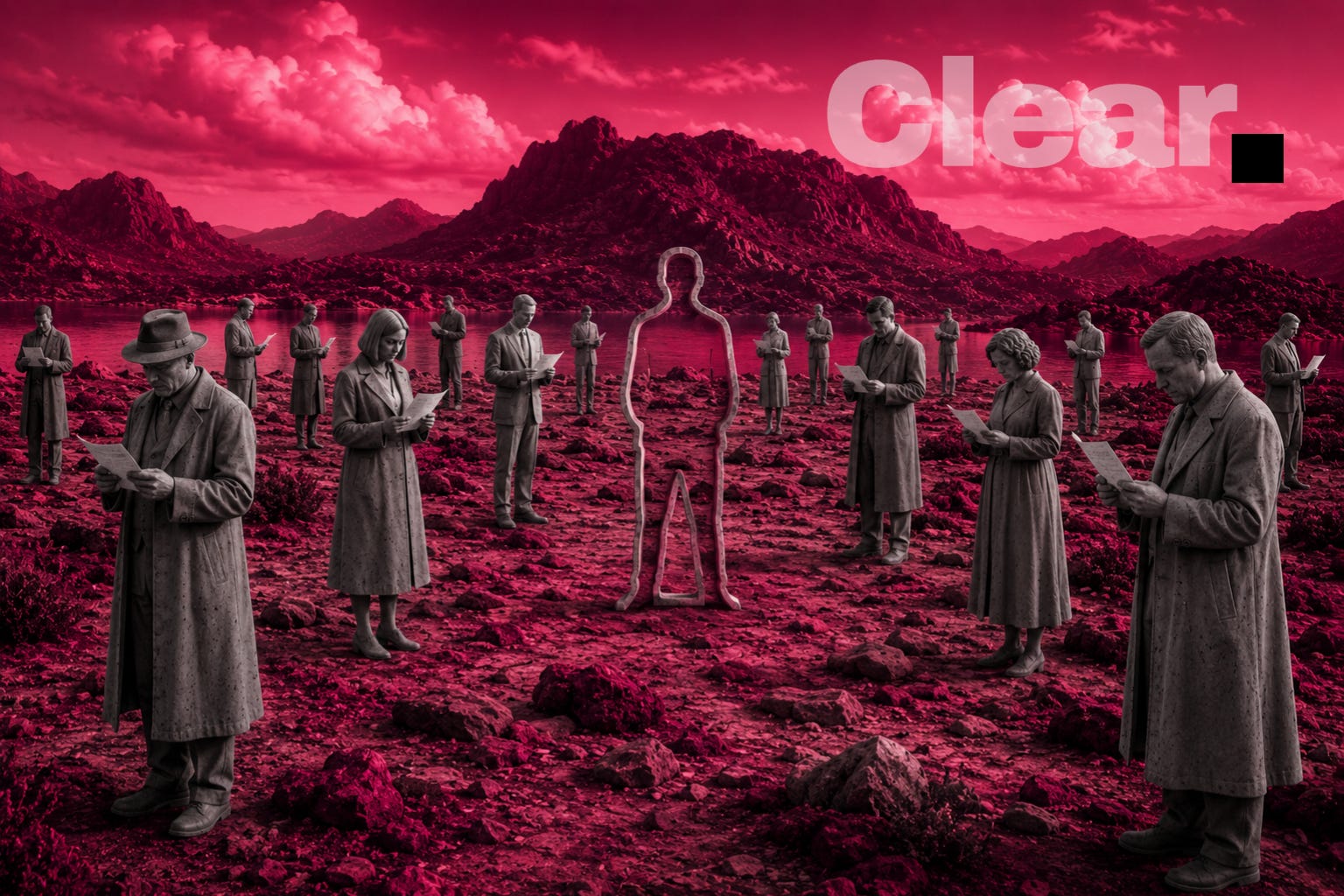
They read it twice and felt the thing you feel when someone smiles at you with their mouth and not their eyes.
That feeling is the most important thing happening in writing right now, and almost nobody is naming it properly.
This year a tool arrived that can produce competent writing on any subject in four seconds. Not good writing. Competent. Clean, correct, organised, and hollow all the way through. And a great many people, drowning and behind and told for years that their own voice was not professional enough, felt something like relief. Finally. Something that writes the way I was always told I should.
They handed the machine the pen. Nobody warned them which half they were giving away.
Because the machine is brilliant at exactly the half of writing that never mattered.
Clever, it turns out, is easy to automate. Of course it is. Clever is pattern. Clever is the metaphor that fits, the structure that balances, the phrase that has worked before. A machine that has read everything is a clever machine by definition. It will hand you a hundred polished openings before your coffee is cold.
What it cannot do is mean a single one of them.
It has never been made small by a client. It has never sat with one sentence for an hour because saying it plainly would cost it something. It has no drawer with a real line in it that it was too scared to publish. It makes the jacket. It has no body to hide.
Which flips the whole game.
For 20 years, sounding polished was proof you were serious. Now a robot sounds polished for free. Polished is worthless. It is the cheapest fucking thing in the world.
The only thing left that a machine cannot fake is the plain, true, slightly awkward line that could only have come from one specific person who has actually lived the thing. The admission that costs you something. The sentence with a real body behind it.
We spent a century sanding that off in the name of sounding professional. And the machine just made professional free, and therefore worthless, overnight. The whole market flipped while everyone was staring at the party trick.
I have spent this year in an odd seat. I know these tools better than most writers do, and I love language more than most technical people do, and from that seat the panic looks pointed the wrong way. The danger was never that the machine writes like a human. It is that humans, tired and frightened, start writing like the machine. Smooth. Safe. Correct. Dead. Giving away the one thing that was ever theirs, at the exact moment it became the only thing worth having.
For anyone with something real to say, the job has not got harder. It has got clearer.
Stop competing on polish. You will lose to a robot on polish, today, for free. Compete on the thing it cannot reach. Say the true thing only you would say, in the plain way only you would say it. Be the smile that reaches the eyes.
That is the whole of it. That is what Clear is going to keep going on about, probably for years.
Show me a message you got recently that felt dead. I will show you the plain human line that would have landed instead.