

The Weight You Never Set Down
CLEAR · The Second Reading

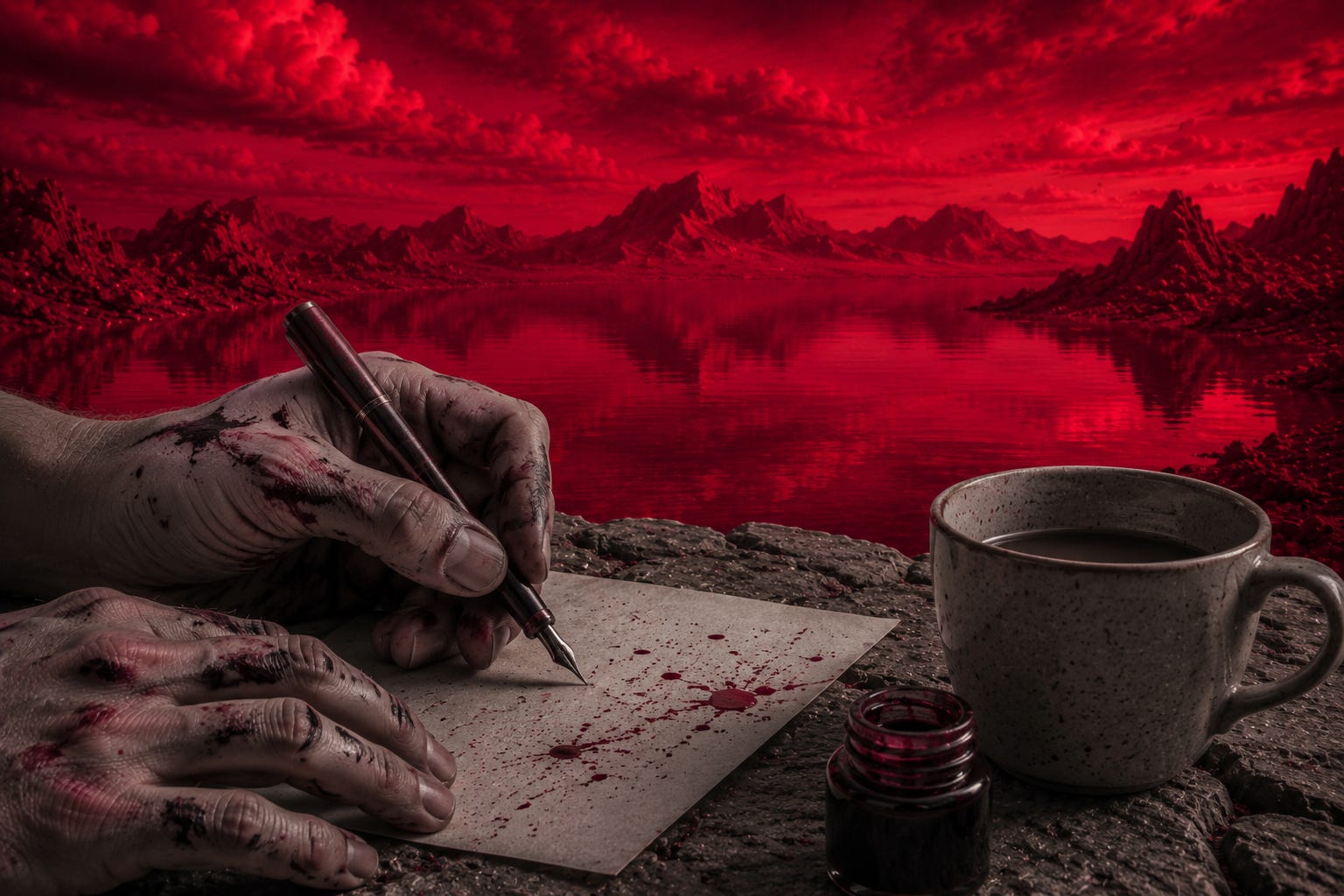
My fingers were stained pink again this morning, before the kettle had even boiled.
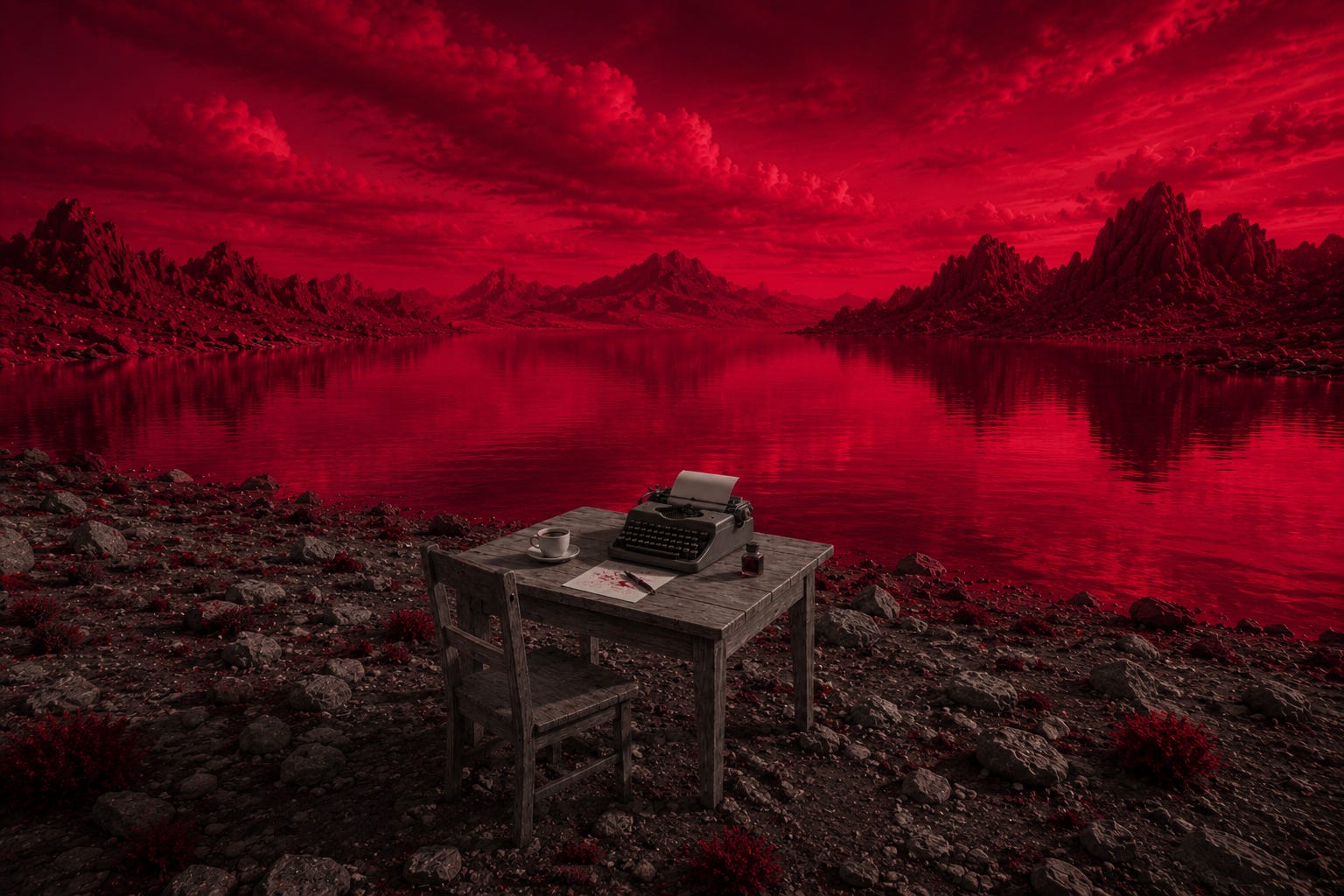
Ink, not blood. I had been fiddling with a fountain pen at the kitchen table, filling it, wiping the nib, and it had left its mark on me the way it always does. Grey light through the window, the proper Wiltshire kind that won’t commit to rain but won’t rule it out. The old Corona typewriter on the desk behind me. A cup of coffee already going cold at my elbow, because it always does.
And then, because the phone was within reach, 3 posts. All 3 telling me the same thing.
I. The story, told again
The 1st was a short video. A man looked into the camera and said, “You think you’re good at thinking until you write.” No setup, no preamble. Just the claim, held out. 798,000 people had watched it.
The 2nd was a thread, and it opened with a history lesson. Back when 90% of us worked the land, nobody needed a gym. The body was the tool. The work was the workout. Then the farms emptied, the factories automated, the offices filled, and we had to go and invent deliberate exercise. We built gyms. We scheduled the thing that used to just be the day. The thread turned the same key on the mind: knowledge work has replaced deep thought the way the office replaced the field, so now we need the mental equivalent of the gym. Daily writing. Reps and sets for the brain. 295,000 views.
The 3rd was from a writer I already follow. He called it “the writing habit that saved my brain.” Same frame. Same prescription.
The myth is compelling. It is also incomplete.
Here is what it gets right, and it gets a lot right. Minds are softening. The knowledge worker spends the day reacting: emails, notifications, threads, tabs, the quick skim and the quicker reply, none of it asking the mind to hold a single idea for longer than it takes to scroll past. The untended life feels noisy from the inside, and the noise is not a fault in you. It is the plain consequence of never asking the mind to lift anything.
The gym analogy lands because it names the mechanism honestly. Just as the body wastes without resistance, the mind wastes without friction. Writing is the friction. You cannot write a sentence without thinking it, and you cannot think it without meeting the gaps in your thinking. The blank page is the weight. The paragraph is the rep.
So far, the myth holds. Then it makes a move it never announces. It assumes the point of the practice is the result. The gym exists to build the body. The writing exists to build the mind. The boulder exists to reach the top of the hill.
That is where the myth stops being true and starts being a story we tell ourselves so the practice feels productive.
II. The line that will not let go
There is a boulder in this already, and there is a man behind it, and Camus put down the line I have never managed to put down.
Il faut imaginer Sisyphe heureux.
One must imagine Sisyphus happy.
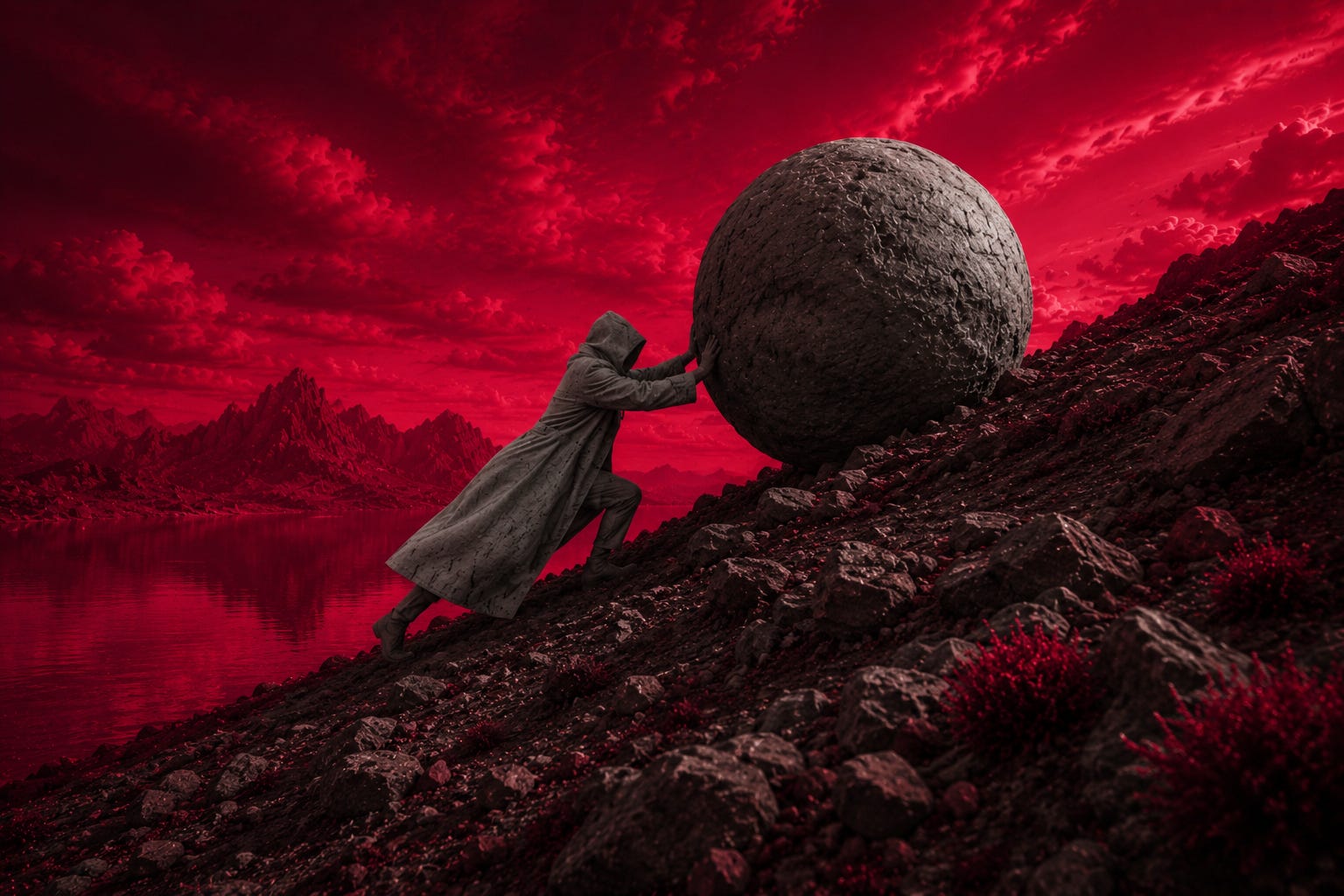
You know the sentence the gods handed him. Push a boulder up a hill, watch it roll back down, walk down after it, begin again. Forever. And notice what the punishment actually was. Not the labour. People labour. The punishment was the meaninglessness of it: no outcome, no progress, no summit that stays reached.
Camus read the myth twice. Once as a story about futility. Once as a mirror. And the mirror showed him a man walking back down the hill, unhurried, with the whole hour to himself and nothing owed to anyone. The boulder is his. The repetition is his. The gods believed they were punishing him. He had decided he was doing his work.
III. What it encodes
Read the gym analogy a second time and here is what it leaves out.
A workout is spent.
A practice is kept.
The barbell exists to be set down. You lift it precisely so that, in the end, you can put it down heavier than you picked it up. Every rep is a payment toward a result that ends the reps. But the boulder is not the barbell. The boulder does not resolve into a stronger body or a sharper mind or a finished thought. The boulder is forever, and the forever is not a sentence. It is the practice itself.
The analogy wants the boulder to reach the top. It wants the writing to hand over the clear thought, the better conclusion, the harder mind, and then be done. It wants the practice to earn its keep somewhere other than in the practice.
But the practice does not need to lead anywhere. The old stories already knew this, which is why they gave the work to a king and called it eternal rather than useful. The boulder is the practice, and the practice is enough.
IV. What I did with it
I know this because the practice has changed things the analogy has no room to name, and none of them are on the results page.
It changed the shape of my mornings. Before, the morning was a ramp: I woke into noise, the phone and the inbox reaching for me before I had reached for myself. Now the morning has a spine. The slow five. 5 things done slowly, every morning, before the world asks for anything. The kettle. The pen. The page. The hour. The not-knowing. The morning stopped being the thing that happens to me and became the thing I keep.
It changed the feel of the hour. Most hours belong to someone else, to the meeting or the deadline or the reply owed. This one belongs to nobody. It does not ship. It does not grow the list or convert the reader. It is the pen on the page, the cold tea, the grey light, and it is mine, and that turns out to be the whole of its worth.
It changed the texture of my attention. Attention is not a switch, on or off. It has grain and weight. The attention I bring to a thread is not the attention I bring to a book, and neither is the attention I bring to a blank page. The practice works on it the way a river works on a stone. Slowly, without fuss, until the surface is worn smooth enough to hold something.
It changed the objects I keep near me. A little stash of stationery went missing for 3 days this week, tape and comb and measuring tape, and it unsettled the whole practice, not because I needed a comb but because the arrangement is load-bearing. The right things in the right place and the mind settles back into the work. My wife found the stash. The mojo came back on. This is not a metaphor. It is the environment of attention, working exactly as it works.
And it leaves evidence. Pink fingers, ink under the nails, the physical trace of an hour spent at the work rather than at the feed. The gym does not care what colour your hands are at the end. The practice does. The practice leaves a mark on you, and the mark is the proof you were there.
The barbell was always going to be set down. The boulder is the one you get to keep.
Keep this
The boulder is the practice, and the practice is enough.
If it calls to you, try 1 small thing tomorrow. Before the world asks for anything, sit down with a pen and a single page and write for 10 minutes. Not to publish. Not to think more clearly, not to build the mind or train the brain. Just to see what happens to the texture of the hour. The goal is not the conclusion. The goal is the keeping.
Sarra.
The kettle again, made properly this time, the pot and the wait and all of it. Steam rising off the cup while the ink on my fingers dries. No conclusion in any of it. That was never the point.
CLEAR is written by Sarra Richmond. She keeps a commonplace book, refills fountain pens more slowly than she needs to, and reads the old stories twice. She writes here about attention, myth, and the small practices that make a life feel attended-to.